
What Causes Concrete to Sink in East Texas?
Concrete sinks in East Texas primarily because expansive clay soils shrink and swell as moisture levels change. Poor soil compaction, erosion beneath concrete slabs, and improper drainage also create voids that allow driveways, sidewalks, patios, and other concrete surfaces to settle unevenly. Addressing the underlying cause is essential for a long-lasting repair.
Concrete settlement is one of the most common property issues homeowners and businesses face across East Texas. At Barwell Solutions, we understand how the region’s unique soil conditions and weather patterns affect concrete surfaces over time. Our experienced team specializes in professional concrete leveling solutions that restore safety, improve curb appeal, and help protect your investment. Whether you have a sinking driveway in Tyler, an uneven sidewalk in Longview, or a settled patio anywhere in East Texas, we provide honest recommendations, quality workmanship, and customized solutions designed to last. By identifying the true cause of concrete movement before making repairs, we help property owners avoid recurring problems and unnecessary expenses.
Why Does Concrete Settle in East Texas?
Concrete rarely sinks because the slab itself has failed. In most cases, the soil beneath it has shifted, washed away, or compressed over time.
According to the USDA Natural Resources Conservation Service (NRCS), much of Texas contains expansive clay soils known as Vertisols, which naturally shrink during dry periods and swell after rainfall. This continuous movement places stress on concrete slabs and foundations.
The four most common causes of concrete settlement in East Texas are:
- Expansive clay soil
- Soil erosion
- Moisture fluctuations
- Poor soil compaction
Understanding each factor helps property owners recognize problems early before they become more expensive to repair.
What Is Expansive Clay Soil and Why Does It Cause Concrete to Sink?
Expansive clay soil is the leading cause of concrete settlement across much of East Texas.
Unlike sandy soils, expansive clays change volume depending on how much moisture they contain. During extended dry weather, the soil shrinks and leaves gaps beneath concrete slabs. When heavy rain returns, the soil expands again. This constant cycle causes slabs to rise, settle, crack, and shift over time.
Research published by the American Society of Civil Engineers and Engineering Geology has shown that moisture-driven shrink and swell cycles are among the primary reasons structures built on expansive Texas soils experience movement.
Common signs include:
- Uneven sidewalks
- Cracked driveways
- Sunken patios
- Concrete steps pulling away from the home
- Gaps beneath slabs
How Does Erosion Cause Concrete to Sink?
Erosion removes the soil that supports concrete.
When water repeatedly flows beneath driveways, sidewalks, or patios, it gradually washes away supporting material. As empty spaces develop under the slab, the concrete eventually settles into those voids.
Common sources of erosion include:
- Poor yard grading
- Leaking water lines
- Overflowing gutters
- Improper drainage
- Heavy rainfall
East Texas receives significant seasonal rainfall, making proper drainage especially important for maintaining stable soil beneath concrete surfaces.
If erosion is not corrected, simply replacing concrete often fails because the underlying problem remains.
Can Moisture Changes Really Affect Concrete?
Yes. Moisture changes are one of the biggest reasons concrete moves throughout East Texas.
Concrete itself does not usually shrink enough to create major settlement issues. Instead, the soil beneath it expands when saturated and contracts during dry periods.
Large moisture swings can be caused by:
- Summer droughts
- Heavy seasonal rains
- Tree roots drawing moisture from the soil
- Broken irrigation systems
- Poor drainage around the property
The Texas Department of Licensing and Regulation notes that expansive soils are a common cause of foundation problems because changing moisture levels cause shrink and swell movement beneath structures.
Maintaining consistent moisture levels around your property helps reduce unnecessary soil movement.
Why Is Poor Soil Compaction a Problem?
Concrete is only as stable as the soil beneath it.
If fill material was not properly compacted before construction, it naturally settles over time under the weight of the concrete slab. This process can take months or even years before noticeable sinking occurs.
Poor compaction is more common in:
- New construction
- Home additions
- Driveway extensions
- Sidewalk installations
- Patio projects
Once poorly compacted soil settles, professional concrete leveling is often the most cost-effective way to restore the slab without replacing it.
How Can You Prevent Concrete Settlement?
While no property can eliminate soil movement entirely, homeowners can reduce the risk of future settlement with proper maintenance.
Helpful prevention tips include:
- Keep gutters clean and direct downspouts away from concrete.
- Correct drainage issues before water begins pooling.
- Repair plumbing leaks promptly.
- Avoid overwatering landscaping near slabs.
- Monitor trees planted close to driveways and sidewalks.
- Schedule inspections when you notice early signs of settlement.
Preventative maintenance is often far less expensive than major concrete or foundation repairs later.
Why Professional Concrete Leveling Is Often the Best Solution
Replacing concrete is not always necessary.
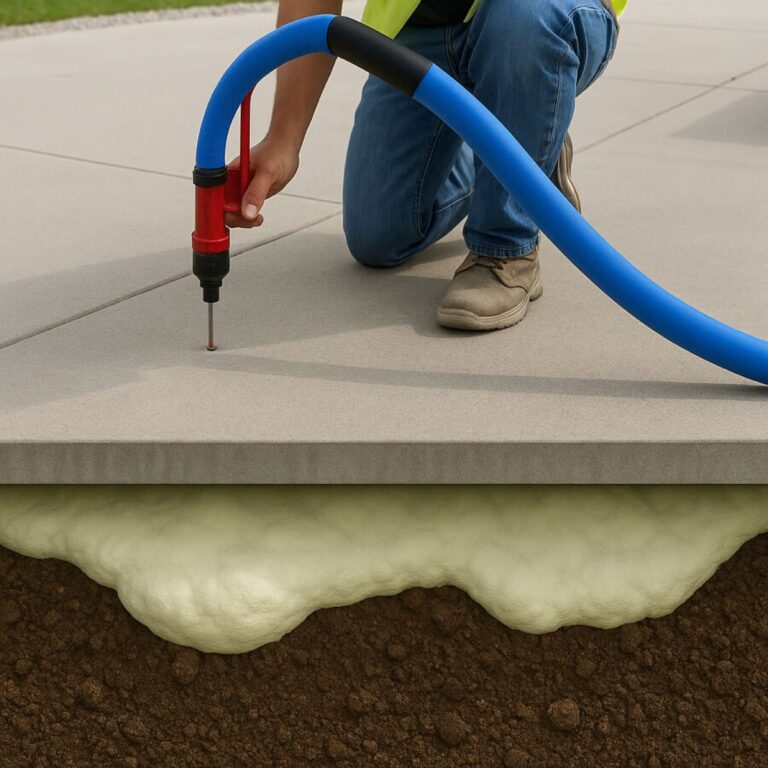
If the slab remains structurally sound, professional concrete leveling can lift and stabilize settled concrete while preserving the existing surface. Modern polyurethane lifting techniques restore the slab to its proper elevation with minimal disruption and significantly less downtime than complete replacement.
At Barwell Solutions, every project begins with a thorough evaluation to determine why the concrete moved, not just how to lift it. Addressing drainage concerns, soil conditions, and long-term stability helps ensure lasting results for homeowners and businesses throughout East Texas.
Frequently Asked Questions
How do I know if my concrete needs leveling instead of replacement?
If the concrete is generally intact but uneven or sunken, leveling is often the better option. Severely broken or deteriorated slabs may require replacement.
Does East Texas clay always cause concrete problems?
Not necessarily. Proper drainage, quality construction, and consistent moisture management can significantly reduce soil movement and extend the life of concrete surfaces.
Is concrete leveling less expensive than replacement?
In many cases, yes. Concrete leveling typically costs less, requires less labor, and allows the repaired surface to be used much sooner than complete replacement.
Will my concrete sink again after leveling?
Professional leveling addresses existing settlement, but long-term performance depends on correcting drainage, erosion, and soil issues that caused the movement in the first place.
Protect Your Concrete Before Small Problems Become Big Repairs
Uneven concrete is more than a cosmetic issue. It can create safety hazards, reduce property value, and lead to larger structural concerns if ignored. If you’ve noticed sinking driveways, uneven sidewalks, settled patios, or other signs of concrete movement, the experienced team at Barwell Solutions is here to help. Our professional concrete leveling services are designed to restore stability, improve appearance, and protect your investment throughout East Texas.
Ready to restore your concrete? Contact Barwell Solutions today to request a quote and learn how our expert concrete leveling solutions can help protect your property.