
Why Does Concrete Sink Around Driveways and Garage Entrances?
Concrete sinks around driveways and garage entrances when the soil beneath the slab settles, erodes, or loses its ability to provide consistent support. Common causes include poorly compacted fill soil, water runoff, drainage problems, and underground leaks. As support decreases, concrete sections can settle unevenly, creating cracks, gaps, and potentially hazardous transitions.
A sinking driveway or uneven garage entrance may seem like a minor inconvenience, but these problems can indicate changing conditions beneath the concrete. Over time, settlement can create tripping hazards, interfere with vehicle access, and allow additional water to collect around your property.
At Barwell Solutions, we understand that homeowners want durable concrete surfaces without unnecessary disruption or expense. Identifying why concrete is sinking is essential to selecting the right repair method and preventing recurring problems.
Whether you’re noticing a growing gap between your driveway and garage floor or a section of concrete that slopes toward your home, learning the common causes of settlement can help you make informed decisions about repairs.
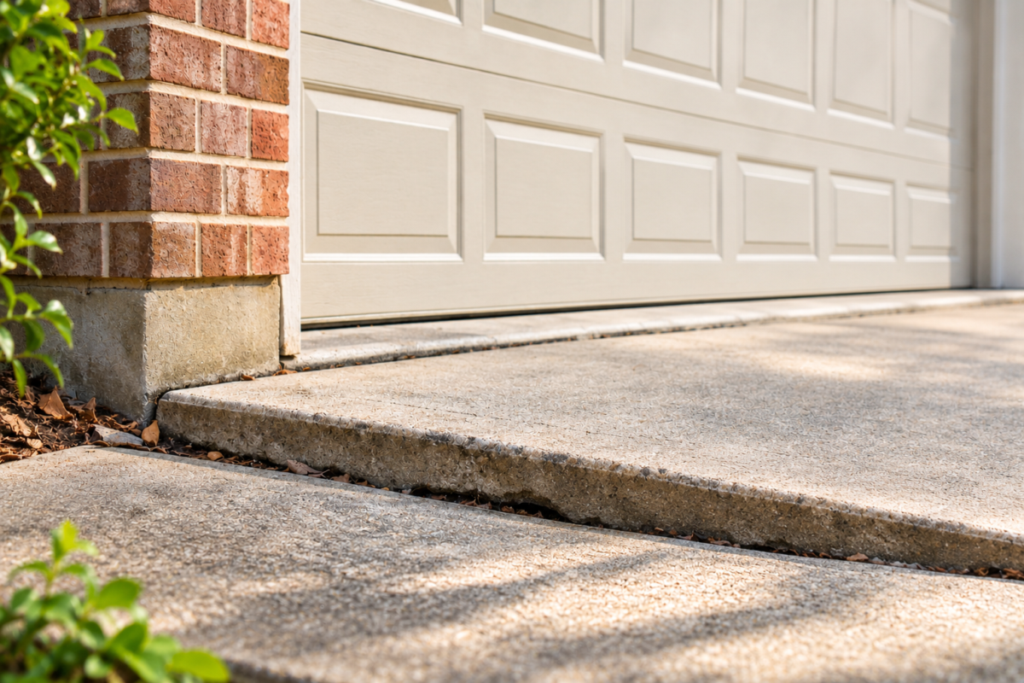
Sunken Driveway Concrete: Common Causes and Repair Solutions
What Causes Concrete to Settle Near Garage Entrances?
Soil settlement and loss of support beneath the slab are two of the most common reasons concrete sinks near garage entrances.
Driveways and garage approaches are particularly vulnerable because they often sit on soil that was excavated, backfilled, or disturbed during construction.
Several conditions can contribute to settlement:
- Poor soil compaction: Loose fill material can compress gradually under the weight of concrete and vehicles.
- Soil erosion: Flowing water can carry away fine soil particles beneath the slab.
- Drainage problems: Water collecting near garage entrances can weaken supporting soil.
- Underground plumbing leaks: Leaking water lines or drainage pipes can contribute to soil movement and void formation.
- Changes in soil moisture: Some soils shrink during dry conditions and expand when wet, contributing to uneven movement.
According to the Federal Highway Administration (FHWA), proper soil compaction and stable subgrade conditions are essential to the performance of pavement structures.
When the soil beneath concrete is not adequately supported, settlement may continue even though the concrete itself remains relatively intact.
Why Does Water Make Driveway Concrete Sink?
Water can contribute to concrete settlement by washing away supporting soil, softening the subgrade, or causing moisture-sensitive soils to change volume.
Driveways are exposed to rain, irrigation runoff, and water draining from nearby roofs and landscaping.
When water repeatedly flows through joints, cracks, or gaps along the edges of concrete, it may carry soil particles away from beneath the slab.
This process can create empty spaces, commonly called voids, that reduce support.
Signs of water-related settlement include:
- Puddles that remain after rainfall
- Soil washing out along driveway edges
- Gaps beneath concrete sections
- Cracks that become wider over time
- Concrete sloping toward the garage
- Erosion near downspouts or drainage outlets
Water collecting near a garage entrance is particularly concerning because it may flow toward the building rather than away from it.
Homeowners should inspect gutters, downspouts, grading, and drainage paths when evaluating sinking concrete.
Correcting water flow is often an important part of achieving a lasting repair.
How Can You Tell if Your Driveway Concrete Is Sinking?
A noticeable height difference between concrete sections is one of the clearest signs of driveway settlement.
Concrete slabs are designed to rest on stable supporting material. When that support changes, one portion may drop below the surrounding surface.
Common warning signs include:
Uneven joints: One driveway section sits noticeably lower than an adjacent section.
A growing gap at the garage entrance: The driveway slab settles while the garage floor remains at its original elevation.
New or expanding cracks: Uneven support causes stress that may lead to cracking.
Standing water: Depressions collect rainwater instead of allowing it to drain away.
Vehicle scraping: Low-clearance vehicles scrape or bottom out when entering or leaving the garage.
Trip hazards: Raised edges or uneven transitions create hazards for pedestrians.
The Americans with Disabilities Act (ADA) accessibility standards generally limit abrupt vertical changes in accessible walking surfaces to 1/4 inch, with certain larger changes requiring beveling or ramp treatment.
Although these standards do not automatically apply to every private residential driveway, they demonstrate why even relatively small elevation differences can affect accessibility.
If you notice new settlement, documenting the affected area with photographs and measurements can help you monitor changes.
Can Sunken Driveway Concrete Be Lifted Instead of Replaced?
Yes. Many sunken concrete slabs can be lifted and stabilized without complete replacement when the concrete remains structurally suitable for repair.
Concrete leveling is designed to address uneven surfaces by restoring support beneath settled sections.
Two common methods include:
Polyurethane Foam Injection
This process involves drilling small access holes and injecting specialized expanding polyurethane material beneath the concrete.
As the material expands, it fills available voids and can help lift the slab toward its intended elevation.
Potential advantages include:
- Small injection holes
- Relatively limited disruption
- Lightweight repair materials
- Ability to fill certain voids beneath concrete
- Short curing times for many products
Mudjacking or Slabjacking
Traditional slabjacking uses a cementitious slurry pumped beneath settled concrete to fill voids and raise the slab.
This method can be effective for suitable concrete sections, although the injected material is generally heavier than polyurethane foam.
The appropriate solution depends on the slab’s condition, the supporting soil, drainage, and the amount of settlement.
Concrete that is extensively cracked, severely deteriorated, or structurally unsuitable for lifting may require replacement.
Importantly, leveling a slab does not automatically correct an underlying drainage problem or unstable soil condition. These issues should be evaluated as part of the repair plan.
How Can You Prevent Concrete Settlement Around Your Driveway?
Maintaining proper drainage and addressing soil erosion can help reduce the risk of driveway settlement.
While homeowners cannot control every change in soil conditions, several preventive measures can help protect concrete surfaces.
1. Keep gutters and downspouts functioning. Direct roof runoff away from driveway edges and garage entrances.
2. Repair drainage problems. Address standing water, eroded soil, and areas where runoff flows beneath concrete.
3. Maintain concrete joints. Use appropriate joint sealants where needed to reduce water intrusion.
4. Monitor nearby landscaping. Avoid irrigation patterns that repeatedly saturate supporting soil.
5. Address small settlement problems early. Uneven concrete can create pathways for additional water infiltration.
6. Schedule a professional evaluation. If settlement continues, have the underlying cause investigated before selecting a repair method.
The American Concrete Institute (ACI) emphasizes the importance of proper subgrade preparation, jointing, and construction practices for durable concrete slabs.
These principles remain relevant when evaluating existing concrete and planning repairs.
Frequently Asked Questions About Sinking Driveway Concrete
Is it normal for concrete to sink near a garage?
Some settlement can occur as soil consolidates over time, especially around areas disturbed during construction. However, noticeable or continuing settlement should be evaluated because it may indicate inadequate support or drainage problems.
How much does it cost to lift a sinking driveway?
Concrete leveling costs vary based on slab size, settlement depth, accessibility, material requirements, and the repair method. A professional assessment is the best way to determine whether leveling or replacement is more cost-effective.
Will concrete continue sinking after it has been leveled?
Concrete can settle again if erosion, drainage problems, or unstable soil conditions remain unresolved. Addressing the underlying cause of settlement helps reduce the likelihood of recurring movement.
Should I repair or replace a sinking concrete driveway?
Leveling may be appropriate when the concrete remains in good structural condition. Replacement may be necessary when slabs are severely cracked, deteriorated, or unable to be restored safely through lifting.
Restore Your Driveway with Professional Concrete Leveling
A sinking driveway or uneven garage entrance can affect your property’s appearance, accessibility, and everyday convenience. Addressing settlement early can help prevent additional damage and reduce the need for more extensive repairs.
At Barwell Solutions, we help homeowners understand the causes of concrete settlement and explore repair solutions that restore stability and improve the usability of their concrete surfaces.
Tired of uneven driveway concrete or a sinking garage entrance? Contact Barwell Solutions today to discuss your concrete leveling needs and discover the right solution for your property.